What Marketers Must Own in an AI-Driven Marketing Landscape
 Nishtha Sharma | Feb 3, 2026 | 6 minutes read
If AI already writes your ad copy and predicts your audiences, what exactly is your role as a marketer?
Marketing has quietly moved past campaign execution. AI is embedded across SEO platforms, ad managers, CRMs, and analytics tools, shaping decisions before humans even open a dashboard. This shift is already showing up in how people discover information. Google says AI Overviews have increased usage by more than 10 percent for the types of searches where they show up.
This means that marketing success will now depend more on orchestrating AI systems with intent, strategy, and judgment.
AI in SEO: Beyond Keywords and Rankings
Search in 2026 operates on understanding intent, not matching keywords. AI clusters queries by intent and context, allowing search engines to surface results that align with user expectations in real time.
That same intelligence is now applied to content evaluation. Performance can be predicted before publication using historical signals, engagement patterns, and shifts in SERP behavior. Rankings now follow topical authority and consistency across formats.
With AI handling relevance and evaluation, SEO professionals are focusing on aspects like strategic alignment with brand voice, offering real-world expertise and original insights, and more.
AI in PPC: Rethinking How Paid Media is Optimized
Paid advertising has evolved into a self-optimizing system. Platforms now observe signals and reallocate spend continuously, often faster than any manual workflow. PPC expertise in 2026 centers on judgment and experimentation.
Here’s How AI is Reshaping PPC Execution:- Autonomous Bidding and Budgets: AI adjusts bids in real time based on conversion probability and marginal ROI across channels.
- Predictive Audience Targeting: User intent is inferred from behavior patterns and historical outcomes. This enables precision targeting before intent becomes explicit.
- Creative Performance Forecasting: Algorithms predict which visuals and formats will drive engagement before full-scale launch.
- Campaigns Built for Individuals: Each user effectively experiences a unique ad combination, replacing broad audience assumptions.
The marketer's role has evolved from manual bidding and keyword stuffing to a data-driven strategist, focusing on using machine learning insights, translating complex performance data into actionable narratives, and more.
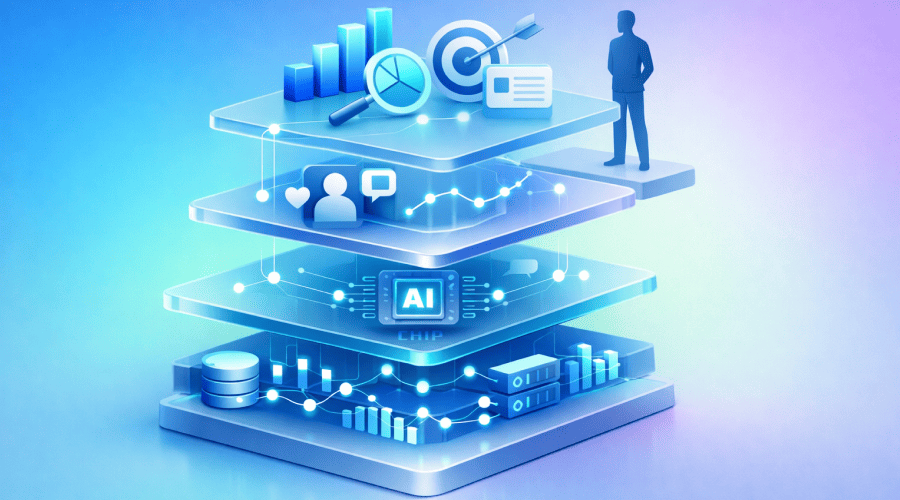
AI in Email Marketing: Hyper-Personalization at Scale
AI now controls how messages are timed and personalized for each subscriber, replacing fixed schedules and static segments with continuous optimization. That shift moves email marketing away from manual scheduling and toward strategic design.
Here’s How AI is Driving Key Areas of Email Marketing:- Subject Line Intelligence: Models test length and emotional triggers across segments to maximize open probability.
- Behavioral Journey Mapping: Emails trigger dynamically based on browsing patterns, purchase intent, and lifecycle stage.
- Predictive Send-Time Optimization: Delivery timing adjusts per user, aligning with individual engagement windows.
- Dynamic Content Assembly: Product blocks, CTAs, and copy adapt in real time based on user context.
Marketers are adding strategic value to email marketing by using AI-driven analytics for deep customer insights, exploring out-of-the-box campaign ideas, and navigating complex data protection regulations (like GDPR and CCPA).
AI in Social Media: From Posting to Performance Intelligence
Social media has evolved into a prediction engine. Social media marketing now rewards strategic direction over volume. Platforms can analyze content signals before posts reach scale, estimating performance before distribution expands.
Here’s How AI is Revolutionizing Social Media Performance- AI-Powered Content Ideation: Models study high-performing formats and creator patterns to suggest content angles with higher engagement potential.
- Trend and Sentiment Analysis: AI detects emotional cues and cultural shifts early, guiding timely and relevant content creation.
- Caption, Hook, and Format Optimization: Language structure, opening hooks, and media formats adapt based on platform-specific consumption patterns.
- Predictive Engagement Scoring: Posts receive projected performance scores, helping teams prioritize ideas that align with reach and interaction goals.
While AI handles data-heavy and repetitive tasks, human expertise remains crucial for evaluating trends, defining content intent, prioritizing content calendars, and ensuring AI interactions do not feel robotic or inauthentic.
The New Digital Marketer Skillset for 2026
AI-powered marketing tools handle execution. Human marketers shape direction and responsibility. Here’s how:
- Strategic thinking to align campaigns with business outcomes
- Brand storytelling to create emotional consistency across channels
- Creative direction to guide AI-generated outputs with intent
- Ethical decision-making to manage data use and audience trust
- Interpretation of AI outputs to translate signals into action
- Learn platforms across SEO, AI in PPC advertising, AI email marketing, and AI social media marketing
- Build analytical skills to evaluate performance patterns
- Practice experimentation and hypothesis-driven testing
Conclusion
AI is redefining digital marketing by automating repetitive execution and expanding decision intelligence across channels. As these systems take on more operational work, human marketers contribute context, creativity, and judgment that AI cannot replace.
Long-term relevance comes from understanding how AI operates inside real workflows and knowing where human direction still matters. Those who master this shift move from operators to strategists, shaping outcomes in an AI-led marketing ecosystem.
For marketers ready to embrace this change, SkillStone offers targeted courses focused on practical AI-powered tools and strategic thinking, helping teams build skills that translate directly into modern marketing work.
FAQs
1. How is AI transforming social media marketing in 2026?AI is shifting social media marketing from manual posting to performance intelligence. Platforms analyze trends, formats, and engagement signals before content reaches scale, helping teams prioritize ideas based on predicted impact rather than volume or guesswork.
2. What role do digital marketers play alongside AI-powered tools on social platforms?Digital marketers guide direction rather than execution. They set content intent, define brand boundaries, and evaluate whether AI-driven recommendations align with brand values, audience expectations, and long-term strategy.
3. Can AI social media marketing replace human creativity and strategy?No. AI can optimize formats, timing, and engagement patterns, but it cannot replace human creativity, brand storytelling, or strategic judgment. Marketers can use AI insights to refine decisions, but not to outsource responsibility.
4. How does AI integration in PPC advertising and SEO affect social media strategies?AI-driven PPC and SEO systems provide audience insights, intent signals, and performance data that inform social media strategy. Together, these channels create a more connected view of user behavior, helping teams align content, messaging, and targeting across platforms.
5. What skills should aspiring digital marketers focus on to thrive in an AI-driven marketing landscape?The ability to guide systems, evaluate outputs, and make informed decisions matters more than manual execution. Aspiring marketers should focus on strategic thinking, data interpretation, and experimentation, alongside hands-on experience with AI-powered tools across SEO, PPC, email, and social media.

You may also like
How to Start Preparing for Campus Placements Early